AI Is Repricing Seniority
AI is weakening some old signals of seniority while increasing the premium on judgment, taste, prioritization, orchestration, and the ability to learn in public without fake certainty.
AI Is Repricing Seniority
AI is not only changing how work gets done. It is changing which kinds of experience still carry leverage.
is useful because it says the quiet part plainly. Many people who spent a decade becoming good at software-era crafts now feel the ground moving under them. Growth, product, marketing, sales, analytics, and engineering still matter, but the old path from repetition to expertise feels less stable.
That feeling is not personal insecurity. It is a market signal.
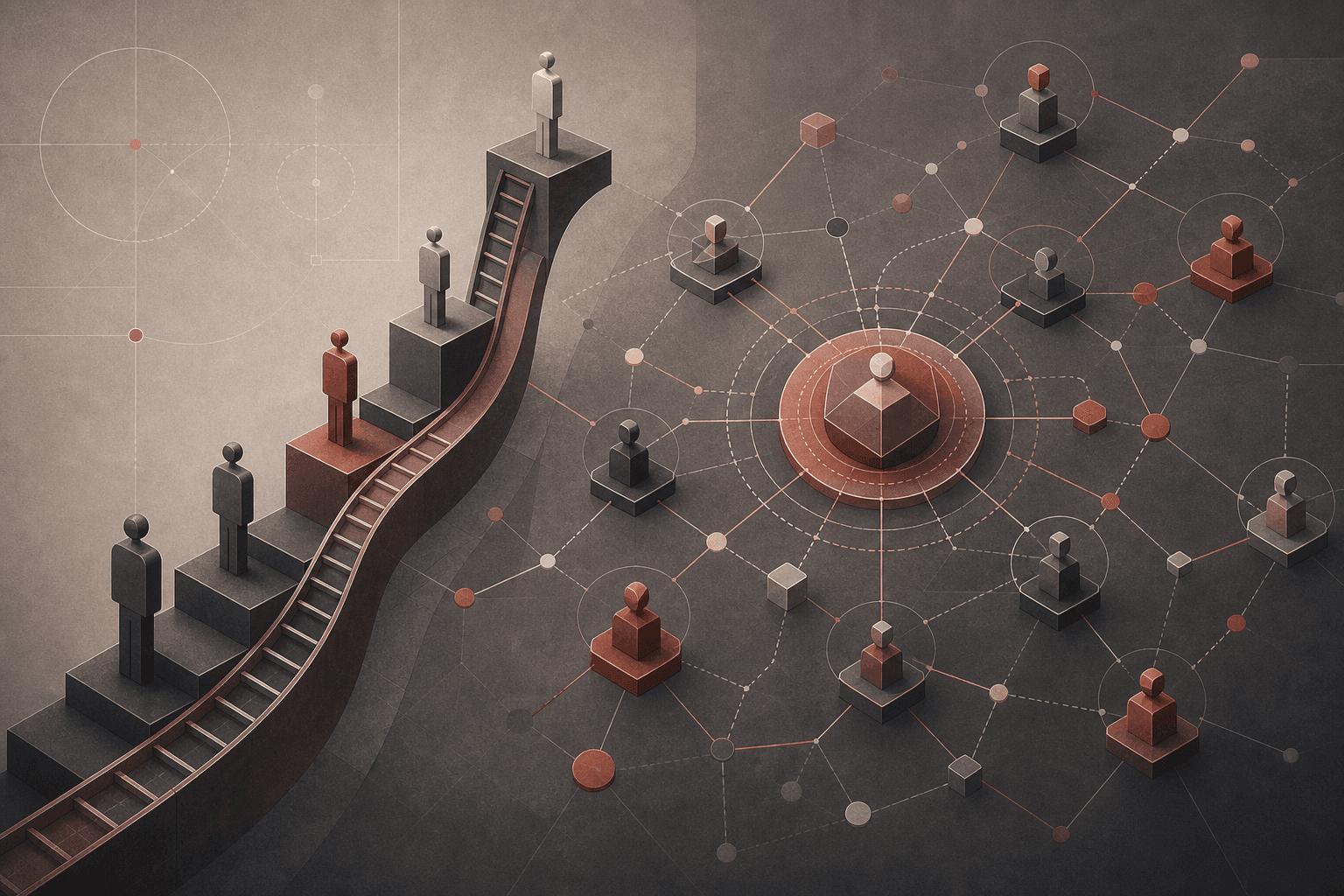
AI is repricing seniority.
Execution Experience Is Losing Some Scarcity
For years, seniority was partly earned through accumulated execution. You had seen more launches, more incidents, more stakeholder fights, more broken dashboards, more failed campaigns, more architectural compromises. That history mattered because execution was slow and learning was expensive.
AI compresses parts of that cycle.
A junior operator can now draft credible plans, analyze transcripts, generate test cases, summarize markets, sketch interfaces, write code, and explore alternatives far faster than before. The output may not be excellent, but it is often good enough to challenge the old hierarchy of who gets to produce first drafts.
This does not make experience irrelevant. It changes what experience is for.
The New Premium Is Judgment Under Abundance
When output was scarce, the person who could produce reliable work had leverage.
When output becomes abundant, the person who can choose, evaluate, sequence, and stop work gains leverage.
That is a different senior skill set:
- knowing which problem is worth solving,
- recognizing weak evidence,
- spotting counterfeit confidence,
- deciding when a workflow needs determinism,
- designing review loops,
- and connecting work to business consequences.
These skills were always valuable. AI makes them more visible because the surrounding production cost falls.
The senior person is less protected by being able to do the work manually. They are protected by knowing what good work is, why it matters, and how to make a system produce it repeatedly.
Fake Confidence Is Now an Organizational Risk
The speed of AI has created a social problem inside companies.
Everyone appears to have a workflow. Everyone appears to know which tools matter. Everyone appears to be shipping a personal operating system. That creates pressure to perform certainty before the organization has built shared truth.
This is dangerous.
When senior people pretend they are not confused, junior people stop asking basic questions. When teams hide uncertainty, leaders overestimate readiness. When organizations reward AI theater, they get shallow adoption instead of capability.
The antidote is not performative humility. It is disciplined learning in public.
Leaders should say what is known, what is working, what is not ready, and what evidence would change the plan. That is how organizations build real AI literacy instead of a hierarchy of private hacks.
Training Has to Change
If AI reprices seniority, training juniors by giving them only low-level execution work becomes fragile. Some of that work will be automated. Some will remain necessary but less central. The apprenticeship model has to move closer to judgment.
Teams should teach juniors to:
- compare outputs, not just generate them,
- inspect assumptions,
- design small evaluations,
- trace decisions to evidence,
- manage AI-assisted workflows,
- and explain why one path is better than another.
That is harder than teaching tool usage. It is also the only serious path.
Where Gaia Fits
Gaia's relevance here is not that it makes people "AI-native" by giving them another tool. It is that governed agent work creates a place where teams can inspect how AI-supported work is designed, executed, evaluated, and improved.
The , , and are useful follow-ups because they shift the conversation from personal productivity tricks toward organizational capability building.
Practical Takeaway
Leaders should stop asking, "Who knows the newest AI workflow?"
Ask better questions:
- Who can define quality?
- Who can evaluate evidence?
- Who can redesign the workflow?
- Who can teach others without pretending the answer is settled?
- Who can decide what not to automate?
That is where seniority is moving. The people who adapt will not be those with the most confident tool stack. They will be the ones with the clearest judgment under abundance.
About the author
Kostas Karolemeas
Product and Technology Lead of Gaia, two-time founder, and software product executive with more than three decades of experience building and scaling products across healthcare, architectural and mechanical engineering software, logistics and supply chain, financial services and banking, enterprise resource planning (ERP), and visual effects (VFX) for television.