Agentic Assistants Need Control Planes, Not Just Memory
Personal and enterprise agents become dangerous when memory, tools, and channels expand faster than control. The core design question is where authority lives.
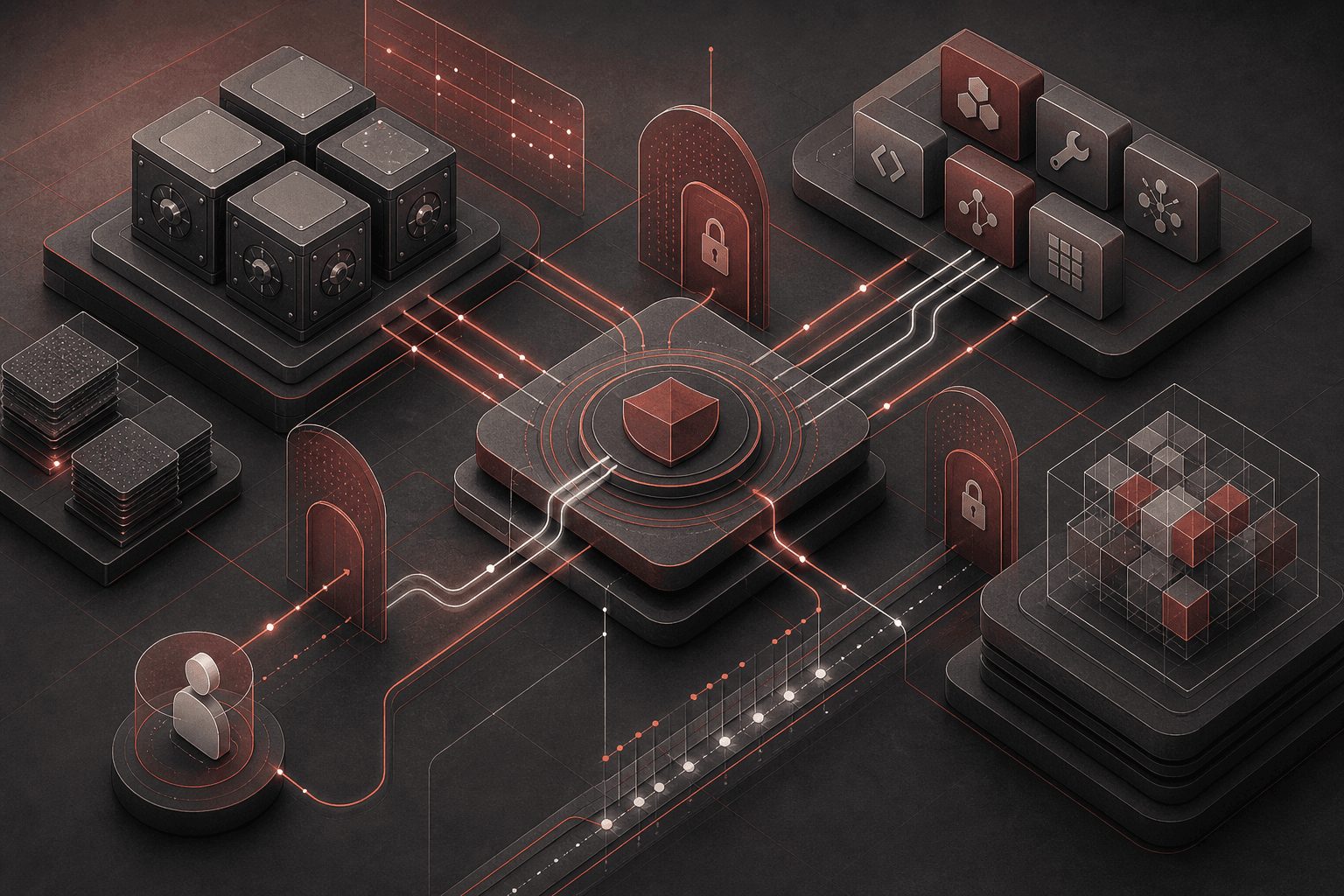
Agentic Assistants Need Control Planes, Not Just Memory
Agentic assistants are becoming more interesting precisely because they are becoming less like chatbots.
They have memory. They use tools. They connect to channels. They run jobs. They can browse, write files, inspect calendars, invoke integrations, and act across contexts.
That is useful. It is also the point where the assistant stops being a conversational interface and becomes a small operating system.
is a useful case study because it looks past the demo surface and asks where control lives in the stack. The architecture he describes includes channels, a gateway, an intelligence layer, memory, and tools. That is the right level of analysis for the next phase of agentic systems.
The central question is no longer, "Can the assistant do the task?"
The central question is, "Who authorized the assistant to do that, with which memory, through which channel, using which tools, and under what evidence?"
Memory Is Not Governance
Long-term memory makes assistants feel more useful. It lets them remember preferences, decisions, routines, projects, and patterns.
But memory also creates institutional risk.
What should be remembered? Who can edit memory? When should memory expire? Which memories are personal, project-specific, or enterprise-wide? Can a memory influence an action in a regulated workflow? Can the assistant explain which memory shaped its response?
If those questions are unanswered, memory becomes an invisible policy layer.
That is not acceptable for enterprise use. An assistant that remembers without governance may appear personalized while quietly carrying stale assumptions, overshared context, or decisions from one domain into another.
Tools Need Boundaries
Tool access is where agentic systems become consequential.
A model that writes text can be wrong. A model that calls tools can cause side effects.
That distinction should shape the whole architecture. Calendar lookup is different from calendar modification. Drafting an email is different from sending one. Reading a repository is different from merging code. Summarizing a customer account is different from changing its status.
Each tool needs a permission model, action classes, approval thresholds, logs, and failure modes.
The agent should not be trusted because it is helpful. It should be constrained because helpful systems still need authority boundaries.
Channels Multiply Risk
Modern assistants increasingly work across Slack, email, web UIs, mobile apps, messaging platforms, and voice.
Every channel creates a new context boundary.
The same instruction may mean different things in a private chat, a group channel, a customer-facing support thread, or an administrative console. The assistant needs deterministic routing and identity resolution. It should not infer where to respond, who is authorized, or which context should carry forward.
This is why gateway layers matter.
They are not glamorous, but they decide how inputs become agent work and how outputs return to users. In mature systems, that routing layer becomes part of governance.
Control Planes Are the Product
The next generation of assistants will compete less on whether they can connect to a tool and more on whether they can operate with durable control.
A serious assistant platform needs:
- identity for users and agents,
- scoped memory,
- tool permissions,
- channel routing,
- audit trails,
- evaluations,
- incident handling,
- and lifecycle management for skills and integrations.
Without those, the assistant is powerful but institutionally immature.
Where Gaia Fits
Gaia treats agents as governed operational systems rather than isolated assistants. The platform's value is in connecting runtime orchestration, tools, conversations, document context, evaluations, governance records, and delivery evidence so teams can see and control what agents are doing.
Useful follow-up resources are the , , and . They show why agentic work needs both flexible user-facing experiences and explicit control layers underneath.
Practical Takeaway
Before deploying an agentic assistant, inventory four things:
- Memories it can read or write.
- Tools it can call and the side effects of each call.
- Channels it can receive from and respond to.
- Logs, evaluations, and approvals that prove control.
If the assistant has memory and tools but no control plane, it is not production-ready. It is a capable demo with unclear authority.
About the author
Kostas Karolemeas
Product and Technology Lead of Gaia, two-time founder, and software product executive with more than three decades of experience building and scaling products across healthcare, architectural and mechanical engineering software, logistics and supply chain, financial services and banking, enterprise resource planning (ERP), and visual effects (VFX) for television.